
 English
 Pусский
 Français
 Deutsch
 日本語
日本語 العربية
 Türk dili
 Indonesia
 中文
中文
TPEE 63D Material
TPEE 63D is a thermoplastic polyester elastomer known for its balanced combination of flexibility, toughness, and durability. It belongs to the family of engineering thermoplastic elastomers and is widely used in applications that require both rubber-like elasticity and plastic-like processability. The “63D” designation generally indicates a relatively high hardness level, meaning this material offers a firmer feel than softer elastomers while still retaining excellent resilience and recovery. This makes it suitable for parts that must withstand repeated stress, bending, or impact without permanent deformation.One of the main advantages of TPEE 63D is its outstanding mechanical performance. It provides high tensile strength, good tear resistance, and strong abrasion resistance, which allows it to perform well in demanding environments. Compared with many conventional rubbers, it has better resistance to wear and longer service life. At the same time, compared with many rigid plastics, it maintains better flexibility and impact absorption. This combination of properties makes it a preferred material for components that need durability and dynamic performance.TPEE 63D also offers excellent fatigue resistance. It can be repeatedly flexed, compressed, or stretched while maintaining its original shape and performance over time. This is especially valuable in applications involving constant movement or cyclic loading. In addition, the material generally shows good resistance to oils, greases, and many common chemicals, which broadens its usability in industrial and automotive settings. It also performs well across a relatively wide temperature range, helping parts remain stable in both warmer and cooler conditions.From a processing standpoint, TPEE 63D is easy to mold and can be used in standard thermoplastic processing methods such as injection molding and extrusion. This gives manufacturers greater design freedom and allows for efficient mass production. Because it can be processed like a plastic, it eliminates many of the limitations associated with traditional vulcanized rubber, such as longer curing times and more complex manufacturing steps. This can improve production efficiency and reduce overall costs.TPEE 63D is commonly used in automotive parts, electrical components, industrial products, cable protection, flexible connectors, and consumer goods. In automotive applications, it may be found in seals, boots, covers, and flexible functional parts. In industrial uses, it is valued for its strength and resistance to repeated motion. Its combination of toughness and elasticity also makes it suitable for protective housings, wear-resistant parts, and parts that need to maintain dimensional stability under stress.Another important benefit of TPEE 63D is its long-term reliability. It resists creep better than many softer elastomers, meaning it is less likely to deform permanently under sustained load. This helps maintain product performance and appearance over time. Overall, TPEE 63D is a versatile, high-performance material that offers an excellent balance of stiffness, elasticity, and durability, making it a strong choice for many engineering applications.
Producto
Categoría:
-
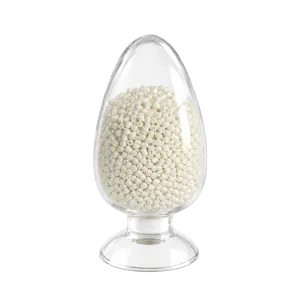
TPEE 63D Compound
Su clasificación: Modified MaterialVistas: 10Número:Tiempo de liberación: 2026-10-09 19:54:34●63D hardness TPEE, an engineering flexible elastomer with superior fatigue resistance and oil resistance.
Noticias
Categoría:
¡Sin resultados de búsqueda!
Caso
Categoría:
¡Sin resultados de búsqueda!
Video
Categoría:
¡Sin resultados de búsqueda!
Descargar
Categoría:
¡Sin resultados de búsqueda!
Reclutamiento
Categoría:
¡Sin resultados de búsqueda!
Productos recomendados
¡Sin resultados de búsqueda!



 Teléfono